

Thailand Industrial Property Market Shows Resilience
04 August 2026
Thailand's Industrial Property Market Remains Resilient as Demand Continues to Support Land Prices Despite Global Uncertainty
Knight Frank Thailand's latest Thailand Industrial Market Overview H1 2026 reveals that the country's industrial property market remained resilient during the first half of 2026, supported by continued demand for industrial land and ready-built facilities despite a moderation in overall foreign investment approvals. While global trade uncertainty and changing investment patterns have influenced decision-making, demand for high-quality industrial space has remained robust, particularly within the Eastern Economic Corridor (EEC), reinforcing Thailand's position as one of Southeast Asia's key manufacturing hubs.
According to Knight Frank Thailand, serviced industrial land continued to record healthy absorption during the first six months of the year, while ready-built factories maintained near-full occupancy. Limited new supply, combined with sustained demand from high-value manufacturing industries, continued to place upward pressure on industrial land prices across the country.
Thailand's industrial property market continues to demonstrate resilience despite a more challenging global investment environment, said Marcus Burtenshaw, Partner – Head of Industry Strategy & Solutions, Knight Frank Thailand. The market is evolving beyond simply attracting investment. As manufacturing projects become larger, more technology-intensive and increasingly focused on long-term operational efficiency, investors are placing greater emphasis on infrastructure readiness, utility reliability and locations that can support future expansion. These factors will increasingly determine the competitiveness of Thailand's industrial market.
Industrial Land Demand Continues to Outperform Expectations
Knight Frank reported that total serviced industrial land supply reached 191,292 rai during the first half of 2026, representing a 3.1% increase from the previous six months. The EEC remained the country's largest industrial region, accounting for 64.6% of total industrial land supply, followed by the Central Region and the Bangkok Metropolitan Region.
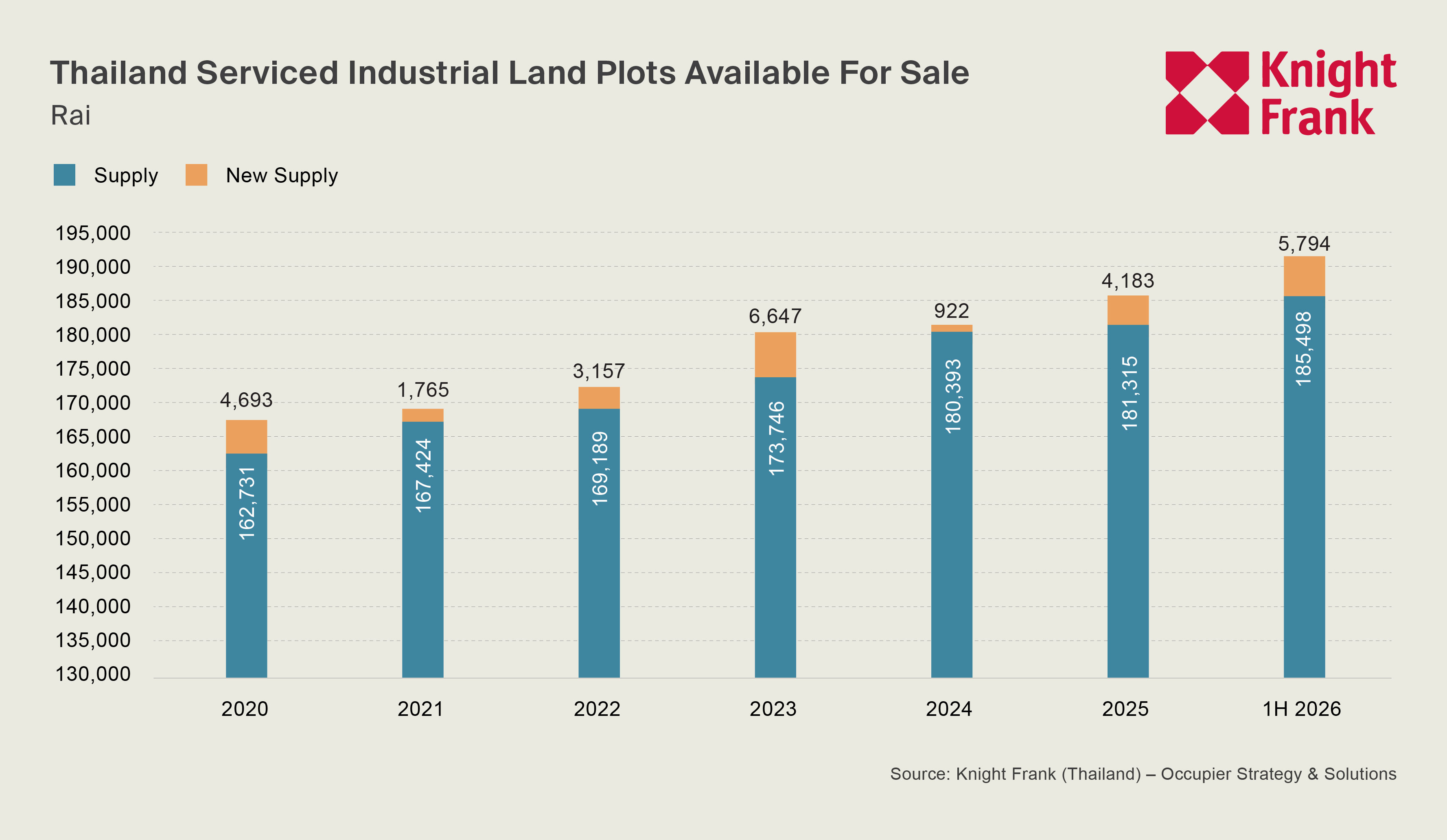
Demand for industrial land remained healthy, with land take-up increasing 17.5% year-on-year to 5,503 rai, despite a slowdown in the number of new investment projects approved during the same period. The continued growth in land absorption suggests that investors remain committed to expanding manufacturing operations in Thailand, particularly within strategic industrial locations offering strong infrastructure and established industrial ecosystems.
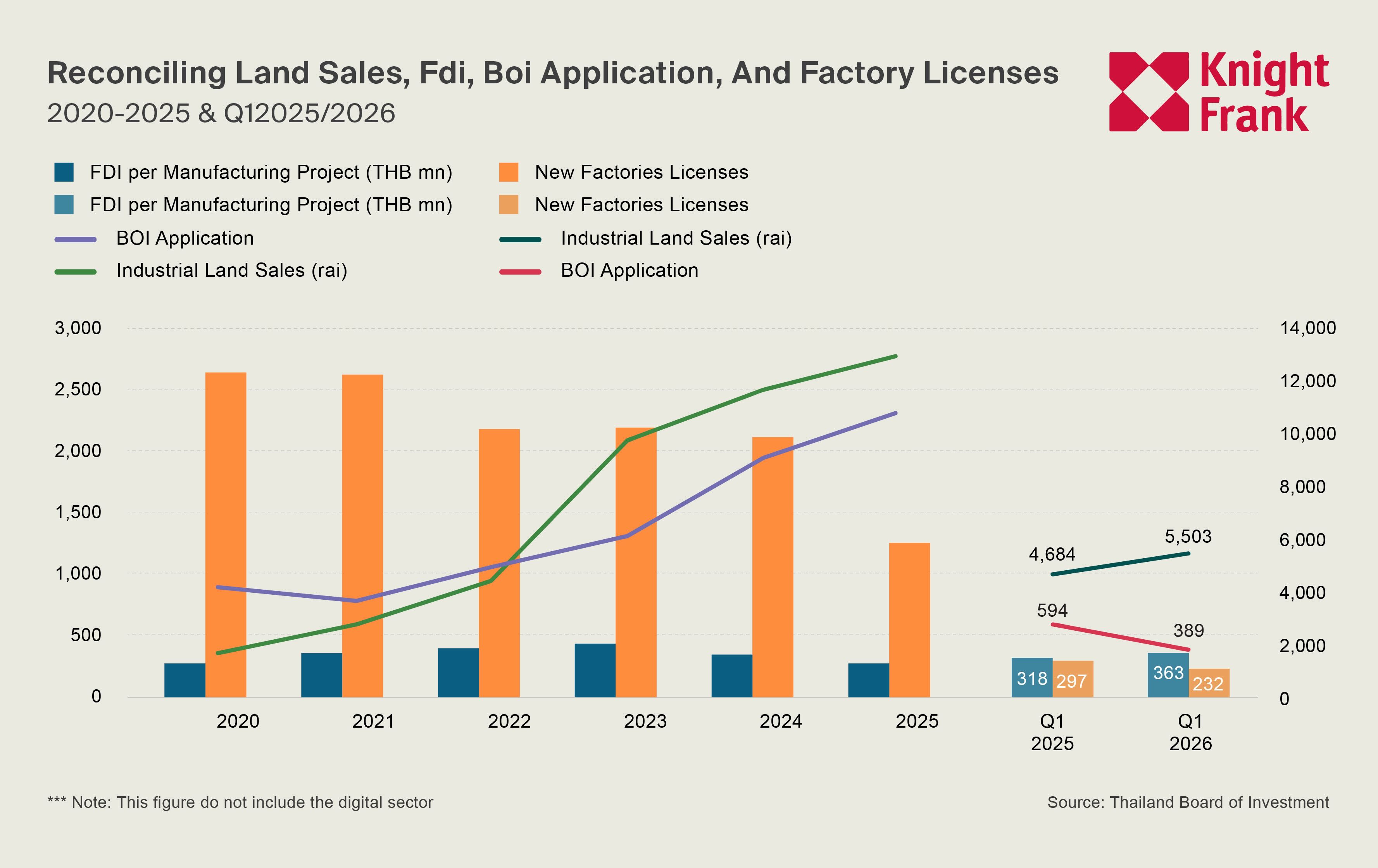
The report also found that investment demand has become increasingly concentrated in sectors requiring larger production facilities and more sophisticated operational infrastructure, including electronics, advanced manufacturing and digital-related industries.
New Supply Expands Gradually as Developers Focus on Quality
While demand remained strong, new industrial supply continued to enter the market at a measured pace. Developers increasingly prioritised built-to-suit and pre-leased projects over speculative developments, reflecting occupiers' growing preference for facilities specifically designed to meet operational requirements.
Within the ready-built factory market, only approximately 10,400 square metres of new space was completed during the first half of the year, all located in Rayong Province. Despite this additional supply, occupancy remained exceptionally high at 98.2%, highlighting continued demand for immediately available industrial facilities.
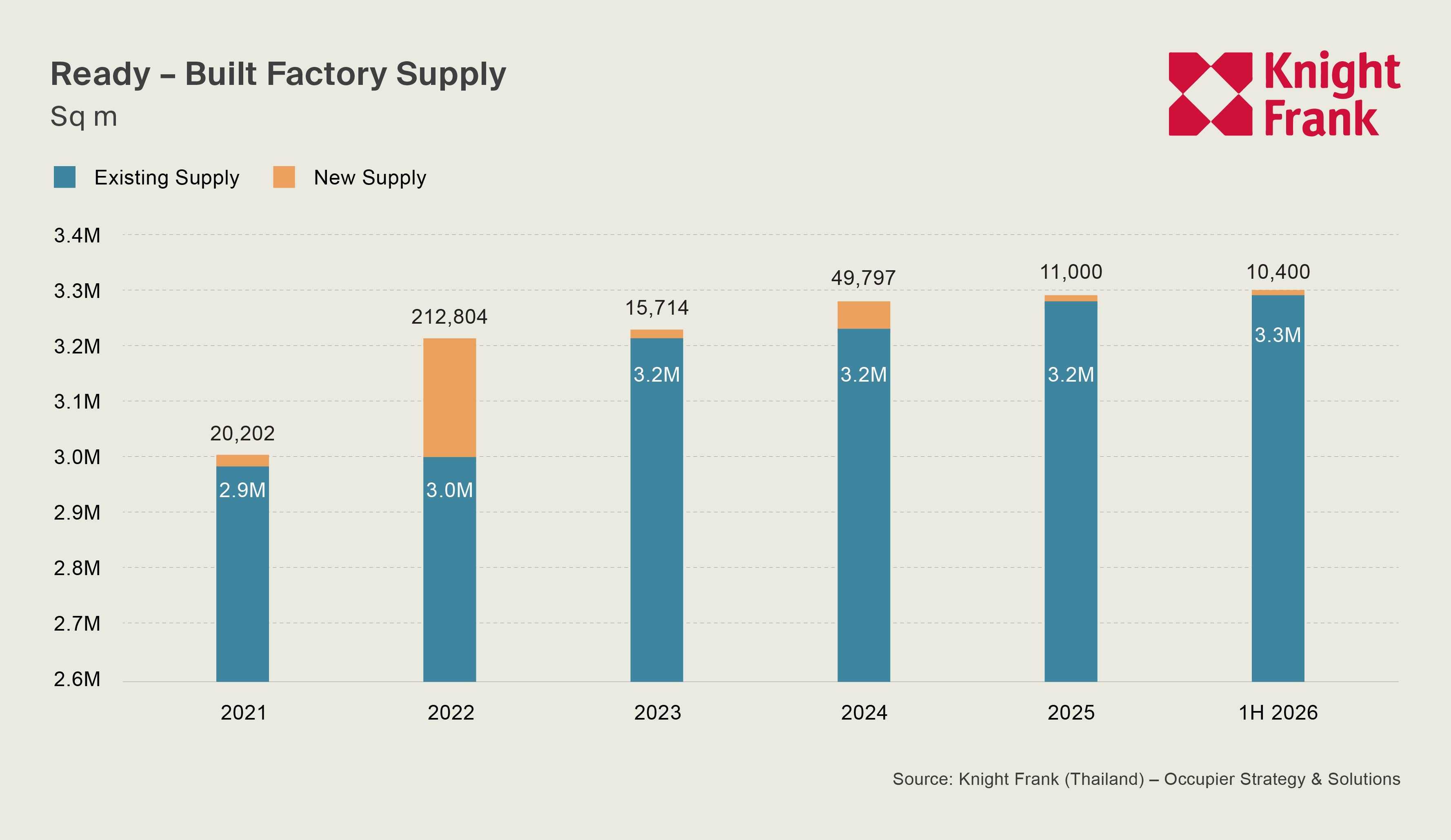
Knight Frank noted that the expansion of industrial supply is becoming increasingly dependent on the availability of supporting infrastructure, utilities and regulatory approvals, particularly within key manufacturing locations where demand remains concentrated.
Industrial Land Prices Continue Upward Trend
Continued demand, combined with limited prime industrial land availability, continued to support price growth across Thailand's industrial market.
The national average asking price for serviced industrial land increased to THB 7.43 million per rai, representing a 16.2% increase year-on-year and reaching the highest level recorded by Knight Frank.
The strongest price growth was recorded within the Eastern Economic Corridor, where industrial land values increased by more than 31% year-on-year, reflecting sustained investor confidence and continued demand from domestic and international manufacturers seeking strategically located industrial sites.
Knight Frank noted that although land prices have continued to rise, investors remain willing to secure sites capable of supporting long-term manufacturing expansion, particularly in locations offering reliable infrastructure, transportation connectivity and established industrial communities.
Manufacturing Investment Shifts Towards Higher-Value Industries
While overall BOI investment approvals moderated compared with the exceptionally strong levels recorded in 2025, investment quality remained robust.
Electronics emerged as the largest investment sector during the first half of 2026, accounting for approximately 40% of total approved investment value, supported by continued expansion in PCB, flexible PCB, HDI PCB and GPU-related manufacturing.
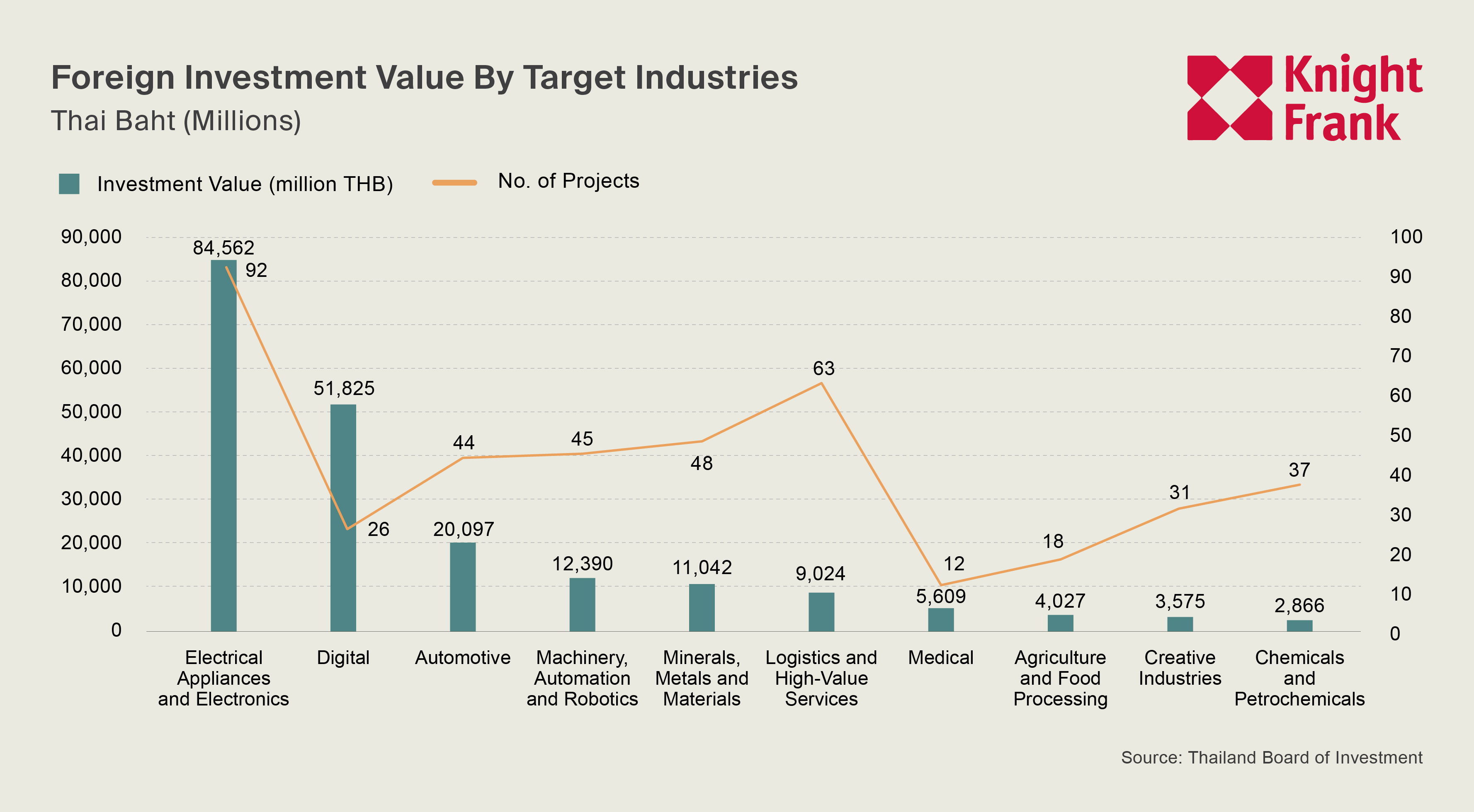
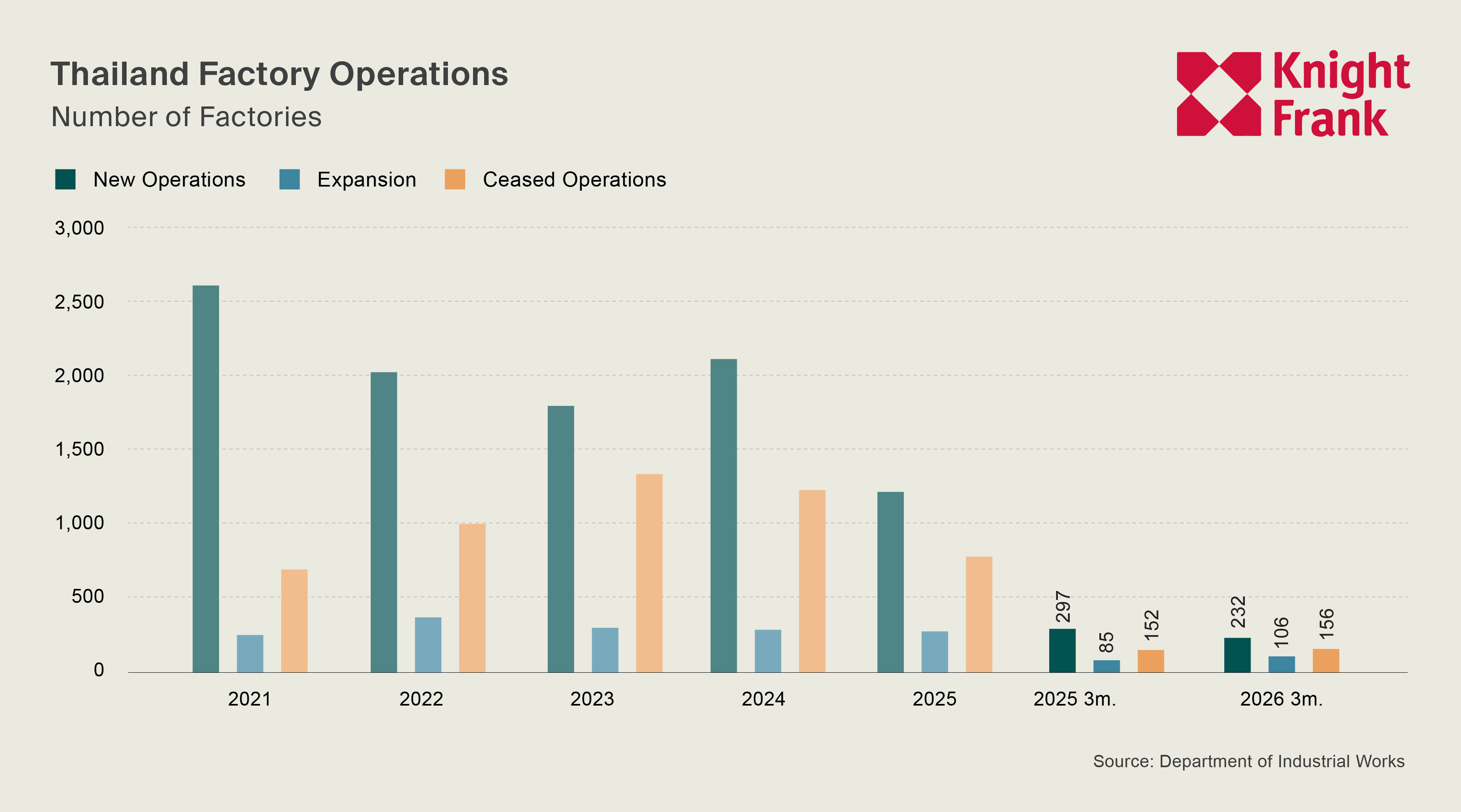
Factory registrations reflected a similar trend. Although new factory registrations declined year-on-year, factory expansions increased, indicating that many manufacturers are choosing to expand existing operations rather than establish entirely new facilities. This reflects continued confidence in Thailand as a long-term manufacturing base while reinforcing the shift towards larger, more capital-intensive investments.
Outlook
Looking ahead, Knight Frank expects Thailand's industrial property market to remain fundamentally strong, supported by continued investment in advanced manufacturing, electronics and technology-related industries.
While global trade policies and geopolitical uncertainty will continue to influence investment decisions, Thailand's established manufacturing ecosystem, strategic location and expanding infrastructure continue to provide a solid foundation for long-term industrial growth.
As industrial investment becomes increasingly sophisticated, the conversation is no longer centred solely on land availability, Marcus Burtenshaw concluded. Success will increasingly depend on whether industrial locations can deliver the infrastructure, utilities and long-term operational certainty that modern manufacturers require. These factors will shape the next phase of Thailand's industrial property market.
View full report Click