

Developers Turn Cautious as Pre-Leased Warehouses Dominate New Supply
12 June 2026
Developers Turn Cautious as Pre-Leased Warehouses Dominate New Supply
Bangkok, May 2026 – Shift toward pre-committed warehouse projects reflects more disciplined market expansion amid evolving occupier demand
Thailand’s logistics property market is entering a more disciplined phase of development, with developers increasingly prioritising pre-leased warehouse projects over speculative construction as they respond to changing market conditions and evolving occupier requirements.
While demand for warehouse space continued to improve in the second half of 2025, developers have adopted a more cautious approach toward supply expansion, focusing more closely on projects backed by confirmed demand. A growing proportion of upcoming warehouse developments are now being pre-committed prior to completion, reflecting stronger leasing confidence while reducing exposure to oversupply risk.
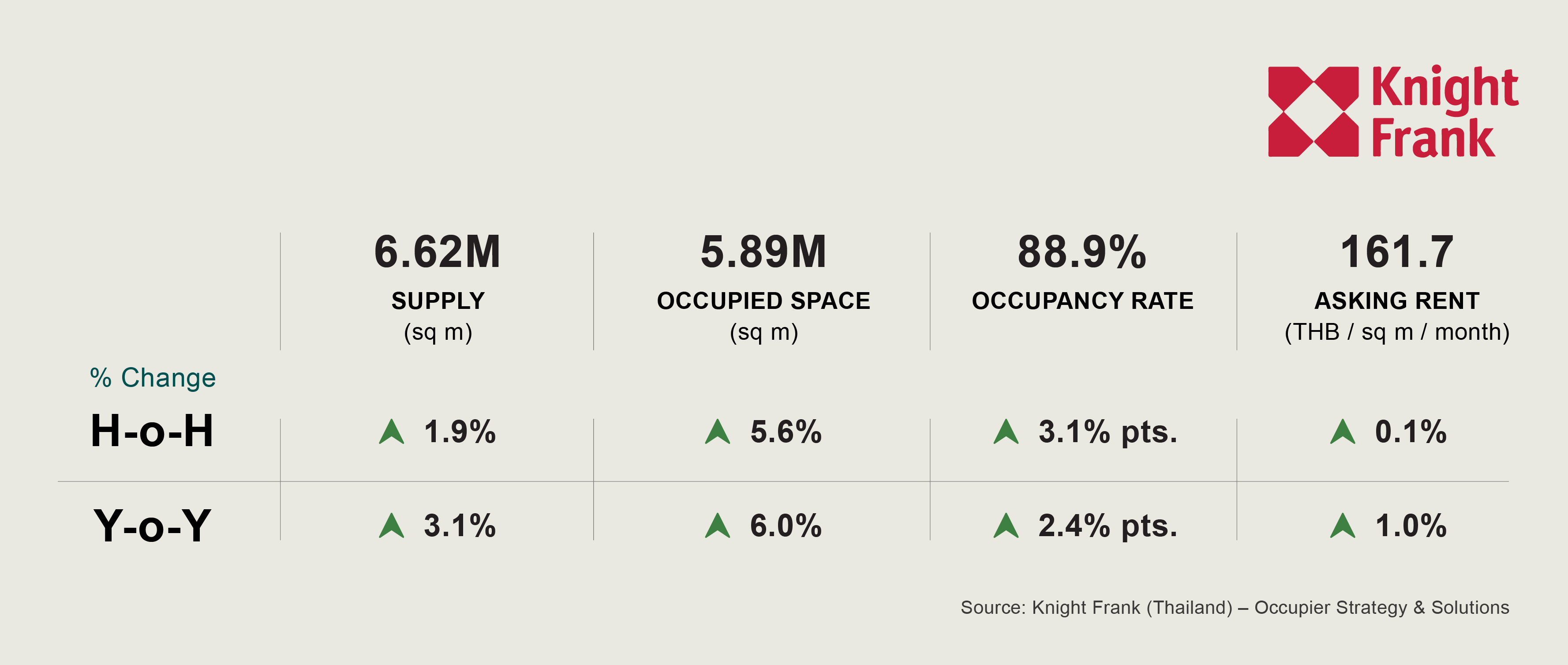
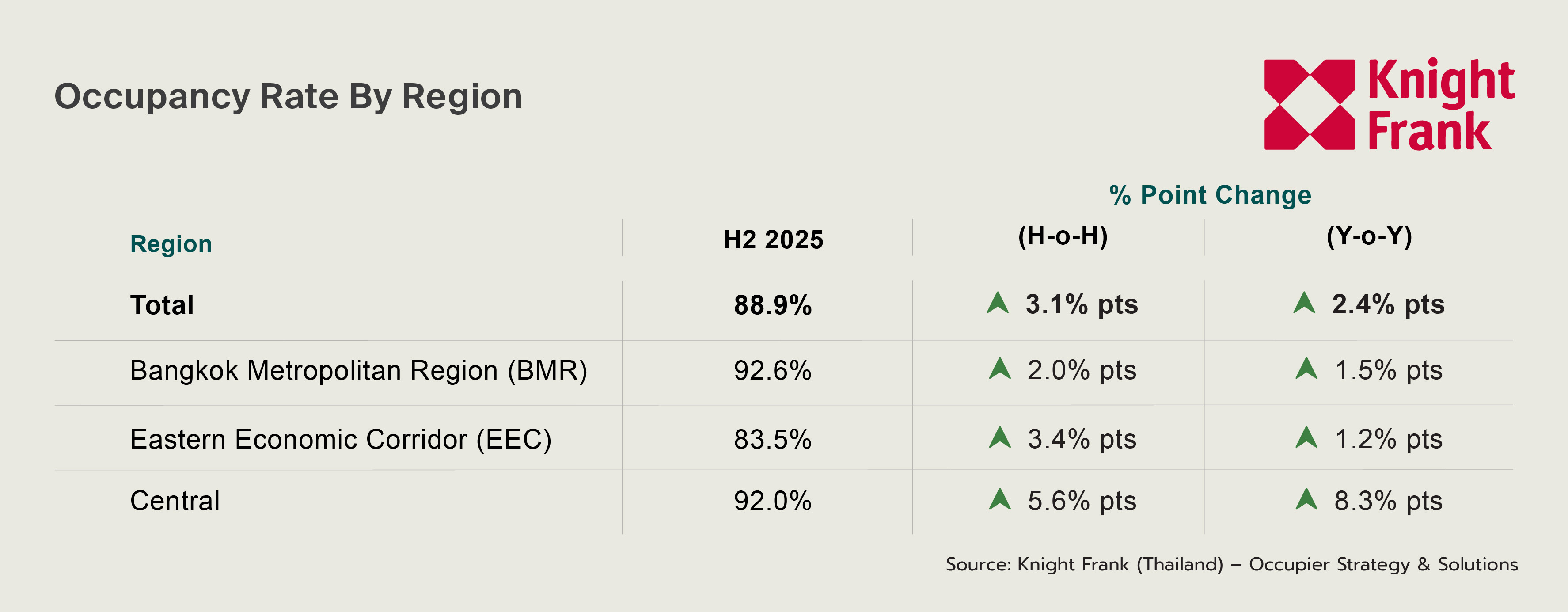
During H2 2025, Thailand’s total warehouse supply increased modestly by 1.9% half-on-half to 6.62 million sq m. Meanwhile, occupied warehouse space expanded at a significantly faster pace of 5.6% to reach 5.89 million sq m, pushing the national occupancy rate up to 88.9%.
The market continues to see strong demand across key logistics corridors, particularly within the Bangkok Metropolitan Region and the Eastern Economic Corridor (EEC), supported by export-oriented manufacturing, trade activity, and ongoing supply chain adjustments by regional and multinational occupiers.
 At the same time, occupier requirements are becoming increasingly sophisticated. Businesses are placing greater emphasis on operational efficiency, automation capability, strategic location, and long-term scalability, driving stronger demand for high-quality logistics facilities within established industrial zones.
“The market has expanded rapidly over the past few years, but what we are beginning to see now is a shift toward more sustainable and disciplined growth. Developers are becoming increasingly focused on the quality and visibility of demand rather than simply accelerating supply expansion, which is a positive sign for the long-term stability of the sector,” said Marcus Burtenshaw, Partner and Head of Industry Strategy and Solutions, Knight Frank Thailand.
The growing preference for pre-leased and built-to-suit developments also reflects a broader change in how occupiers approach logistics strategy. Rather than securing space purely based on availability, tenants are increasingly seeking facilities that can support long-term operational requirements and supply chain resilience.
Looking ahead, Thailand’s logistics property market is expected to remain supported by continued trade activity, manufacturing investment, and regional supply chain diversification. While economic growth may remain moderate, the sector’s increasingly disciplined development approach is expected to support healthier market fundamentals and reduce the risk of significant oversupply over the medium term.