

6 Categories for Considering Green Building Features
Green buildings are more than just planting trees on tall buildings in big cities. They represent a holistic approach to design, construction, and operation that considers three key dimensions: Environment, Social, and Governance.
01 July 2024
Green buildings go beyond environmental impact reduction by positively impacting the health of occupants, saving costs, and enhancing an organization's reputation.
Knight Frank Thailand presents the 6th main categories used to evaluate green building characteristics:
- Sustainability
- WELL-Being
- GHG (Greenhouse Gas)
- Technology
- Waste
- Report
1. Sustainability
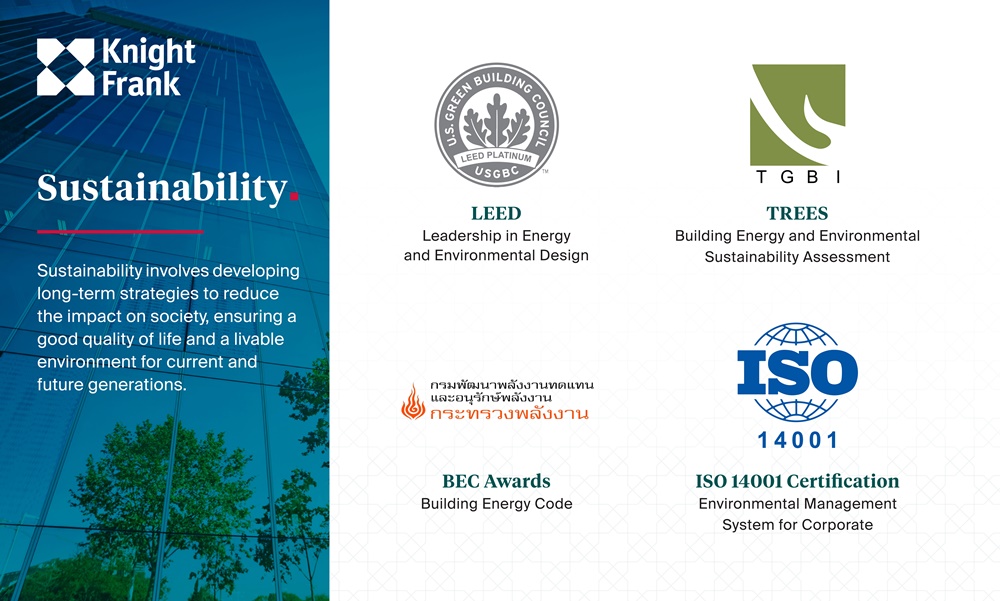
Sustainability involves developing long-term strategies to reduce the impact on society, ensuring a good quality of life and a livable environment for current and future generations.
Currently, institutions involved in this field include:
- US Green Building Council: This well-known organization sets the LEED (Leadership in Energy and Environmental Design) standards, the world's most recognized green building rating system.
- Thai Green Building Institute: They set the TREES (Thai's Rating of Energy and Environmental Sustainability) standards, which is an assessment system for energy and environmental sustainability in buildings.
- BEC (Building Energy Code) Award: This standard for energy conservation design in buildings is issued by the Department of Alternative Energy Development and Efficiency (DEDE).
- Environmental Management System for Organizations: ISO 14001: This standard was developed by the International Organization for Standardization (ISO).
2.Well-Being
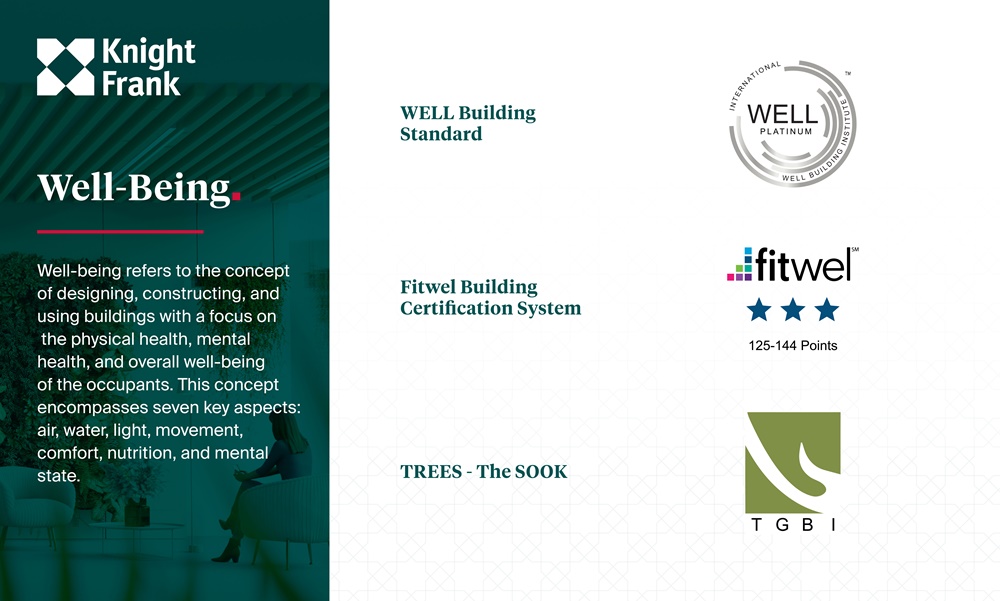
Well-being refers to the concept of designing, constructing, and using buildings with a focus on the physical health, mental health, and overall well-being of the occupants. This concept encompasses seven key aspects: air, water, light, movement, comfort, nutrition, and mental state.
WELL Building Standard is a wellness standard that originated in Canada. The founders later collaborated with the developers of the LEED standard from the United States to establish the International WELL Building Institute (IWBI). It is the world's first standard to prioritize the promotion of the quality of life for building occupants, enabling them to live in today's deteriorating environments. The standards include:
- WELL Building Standard: A widely recognized building performance standard that focuses on promoting health and well-being for building users, developed by the International WELL Building Institute (IWBI).
- Fitwel Building Certification System: A leading global building certification system that promotes good health within buildings for everyone. It was developed by the U.S. Centers for Disease Control and Prevention (CDC) in collaboration with the U.S. General Services Administration.
- TREES – The SOOK: An energy and environmental management system developed by the Thai Green Building Institute (TGBI). This system is an adaptation of the WELL Building Standard to suit the Thai environment and culture, aiming to promote health and well-being in buildings.
3. GHG
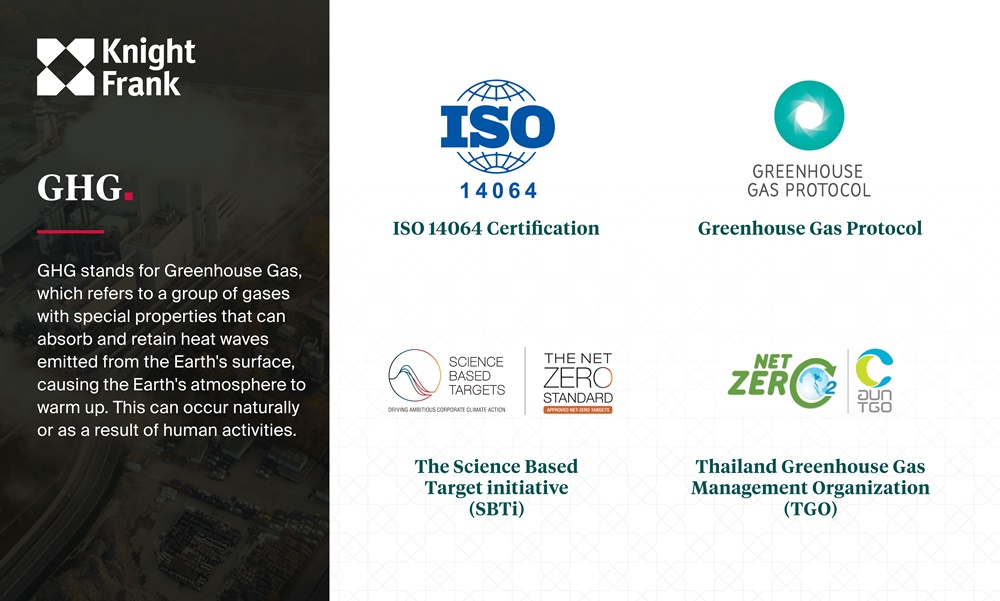
GHG stands for Greenhouse Gas, which refers to a group of gases with special properties that can absorb and retain heat waves emitted from the Earth's surface, causing the Earth's atmosphere to warm up. This can occur naturally or as a result of human activities, such as energy use, transportation, production of goods, manufacturing processes, consumption, and waste disposal.
- ISO 14064 Certification: This is an international standard for greenhouse gas management systems, developed by the International Organization for Standardization (ISO).
- Greenhouse Gas Protocol: This is a guideline for measuring and reporting greenhouse gas emissions, developed by the World Resources Institute (WRI) and the World Business Council for Sustainable Development (WBCSD).
- Science Based Targets initiative (SBTi): This platform helps organizations set targets for reducing greenhouse gas emissions. It was established through the collaboration of four main organizations: CDP (Carbon Disclosure Project), United Nations Global Compact (UNGC), World Resources Institute (WRI), and World Wide Fund for Nature (WWF).
- Thailand Greenhouse Gas Management Organization (TGO): This is a government agency under the Ministry of Natural Resources and Environment responsible for assessing environmental impacts and setting targets for organizations in Thailand.
Stay tuned for Part 2/2 Coming Soon!
If you are looking for ESG expertise, we offer the following services:
+ A team of experienced ESG professionals ready to provide consultation
+ Comprehensive ESG solutions tailored to the needs of organizations, businesses, and investors
+ An extensive network of partners, providing clients with access to cutting-edge resources and technologies
For more service details: https://bit.ly/3wJ1CI4
Contact us
Veeravit Kanjanathiemthao
Senior Business Sustainability Consultant
Tel: 089 893 4781
Email: veeravit.kanjanathiemthao@th.knightfrank.com