

Thailand Enters Era of Fewer Projects, Bigger Industrial Investments
10 August 2026
Thailand enters an era of “Fewer Projects, Bigger Investments” Thailand’s New Industrial Challenge Is Not Attracting FDI, but Building the Capacity to Accommodate It
Knight Frank Thailand revealed that Thailand's industrial property market is entering a significant transition. The country's challenge is no longer limited to attracting foreign direct investment (FDI), but has shifted towards building sufficient capacity to accommodate a new generation of investments. Although the number of investment projects has declined, individual projects are becoming larger, more capital-intensive, and require more sophisticated infrastructure and utilities.
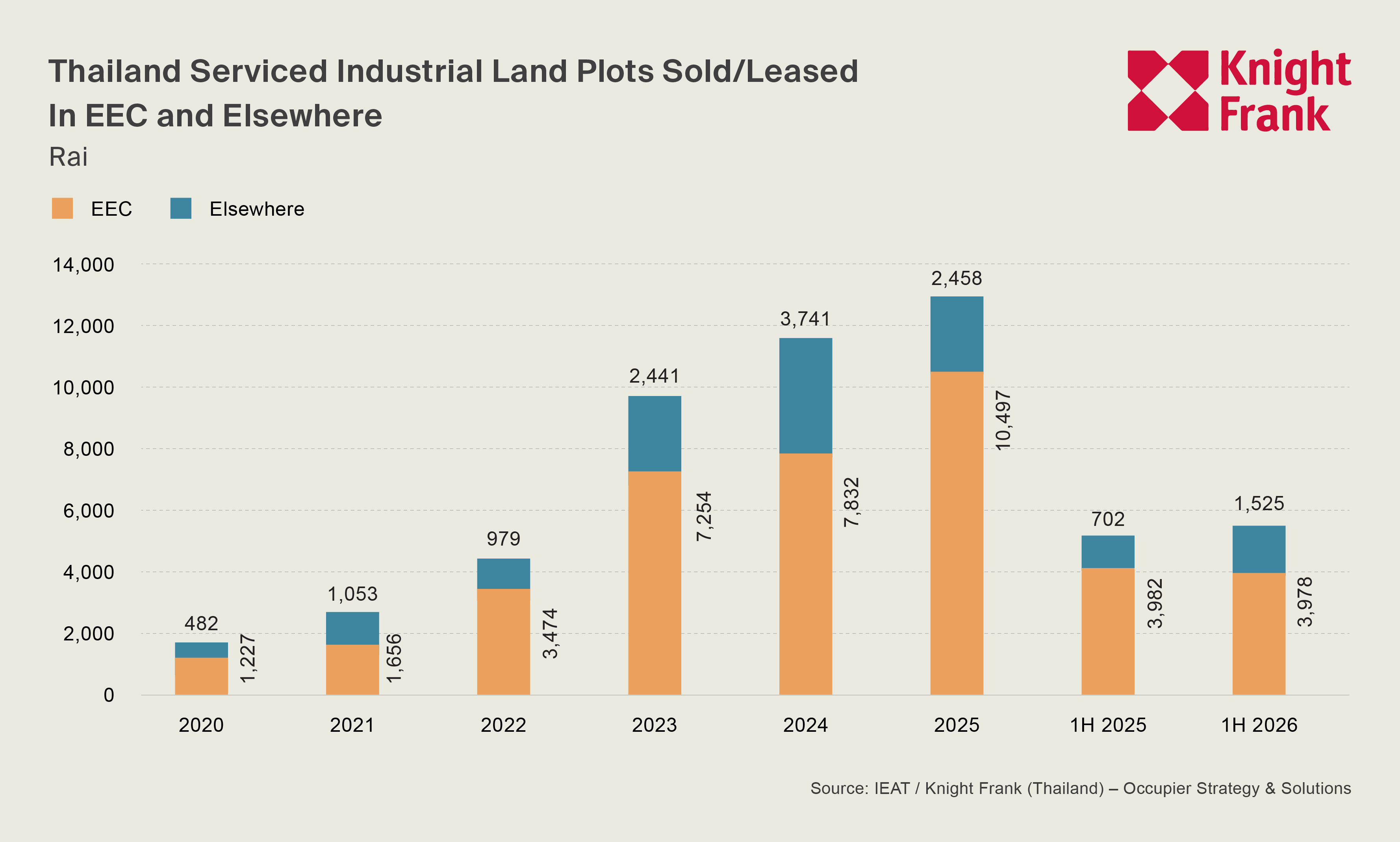
According to the Thailand Industrial Market Overview H1 2026, although the number of BOI-approved investment projects and new factory registrations in early 2026 moderated from the exceptionally high levels recorded in the previous year, Thailand's industrial property market remained resilient. Industrial land take-up increased by 17.5% year-on-year, ready-built factory occupancy remained exceptionally high at 98.2%, while both industrial land prices and factory rental rates continued to rise.
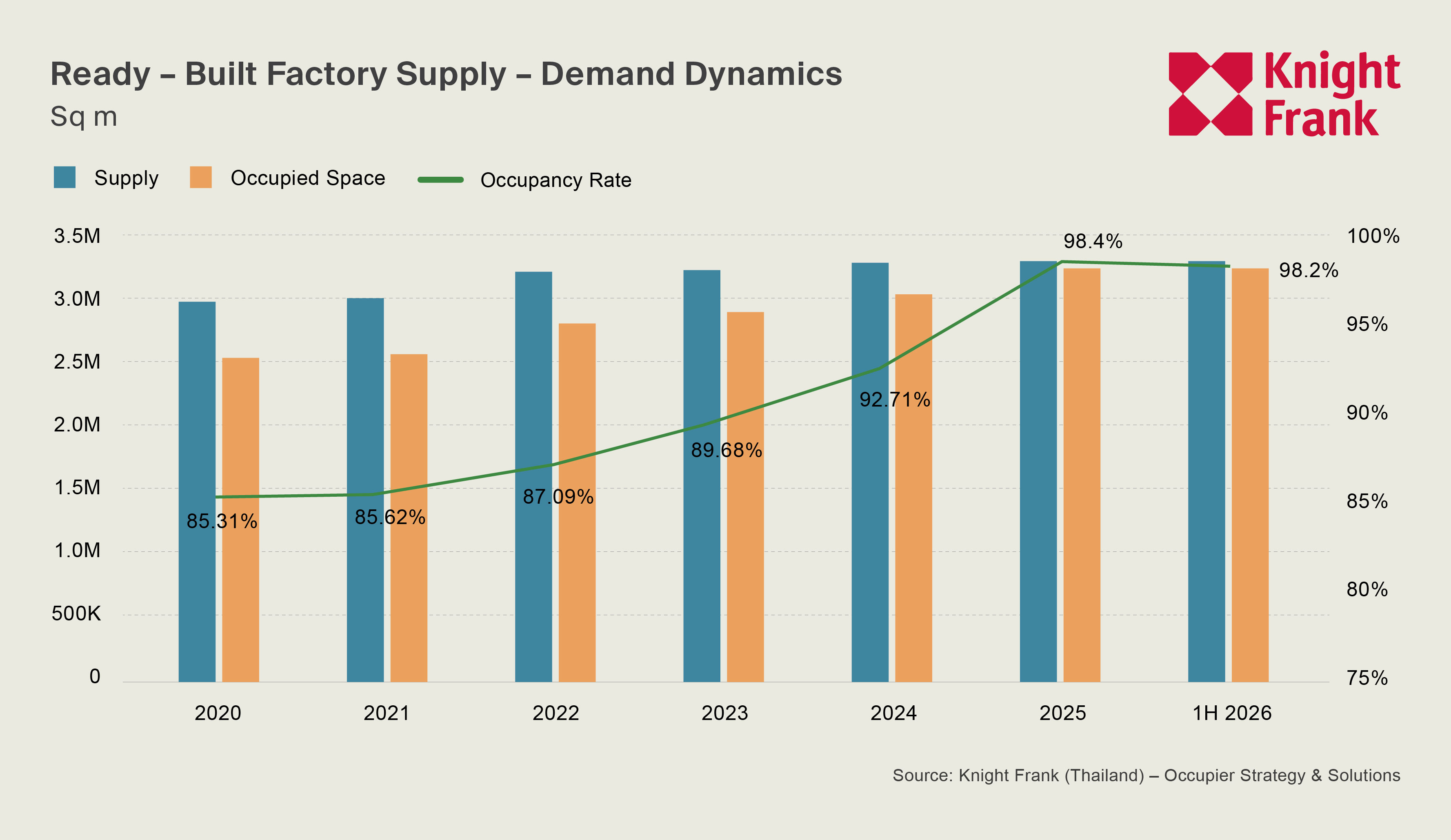
These trends indicate that the market is not experiencing weaker investment demand. Instead, Thailand is entering an era of "Fewer Projects, Bigger Investments," where new projects require larger land areas, higher capital investment per project, and significantly greater demand for utilities and infrastructure than in the past.
Marcus Burtenshaw, Partner – Head of Industry Strategy & Solutions, Knight Frank Thailand, said: "What has changed is not simply the number of investment projects, but the nature of those investments. Today's investors are not just looking for land on which to build a factory; they are seeking locations that can support long-term operations through reliable infrastructure, utility services, and the capacity to accommodate future production expansion."
The report notes that investment entering Thailand is increasingly concentrated in electronics, digital infrastructure, advanced manufacturing, and supply chain-related industries. These sectors require a significantly higher standard of industrial estates, including reliable electricity supply, long-term water security, telecommunications infrastructure, and the ability to support future expansion.
At the same time, the expansion of industrial property supply remains gradual. Developers are increasingly prioritising pre-leased and built-to-suit developments, while the expansion of new industrial estates requires considerable time due to regulatory approvals, infrastructure development, and the provision of supporting utilities. As a result, the market's constraints are no longer driven solely by investment demand, but also by the ability to expand industrial capacity quickly enough to meet evolving market requirements.
Knight Frank believes this structural shift is redefining the competitive advantages of industrial locations. Traditionally, location and logistics connectivity were the key differentiators. Today, competitive advantage is increasingly determined by the availability of robust infrastructure, reliable electricity, secure water supply, telecommunications networks, and an integrated industrial ecosystem capable of supporting long-term business operations.
Marcus added: "Going forward, the competitiveness of industrial locations will no longer be measured by cost or location alone. Instead, it will increasingly depend on their ability to accommodate more sophisticated investments through production capacity, infrastructure, and readiness for future expansion. These factors will become critical considerations in long-term investment decisions."
Knight Frank concludes that Thailand's industrial property market is shifting from competing to attract investment towards competing on capacity—the ability to accommodate the next generation of industrial investment. Industrial locations that can deliver adequate infrastructure, utilities, and long-term development readiness will be best positioned to capture future investment opportunities.
View Full Report: Click