

Bangkok Office Market Absorbs New Supply as Competition Shifts to Value
25 August 2026
Bangkok Office Market Absorbs Major New Supply as Competition Shifts from “Space” to “Value”
After continued concerns that a large volume of new office supply entering Bangkok in 2026 could lead to an oversupply situation, market performance in Q2 2026 is beginning to provide a clearer picture. Despite the largest influx of new office space in several years, leasing demand remained resilient and was able to absorb a meaningful portion of the new supply. At the same time, competition is increasingly shifting from simply providing office “space” towards delivering greater quality, flexibility and value that better responds to occupiers’ evolving requirements.
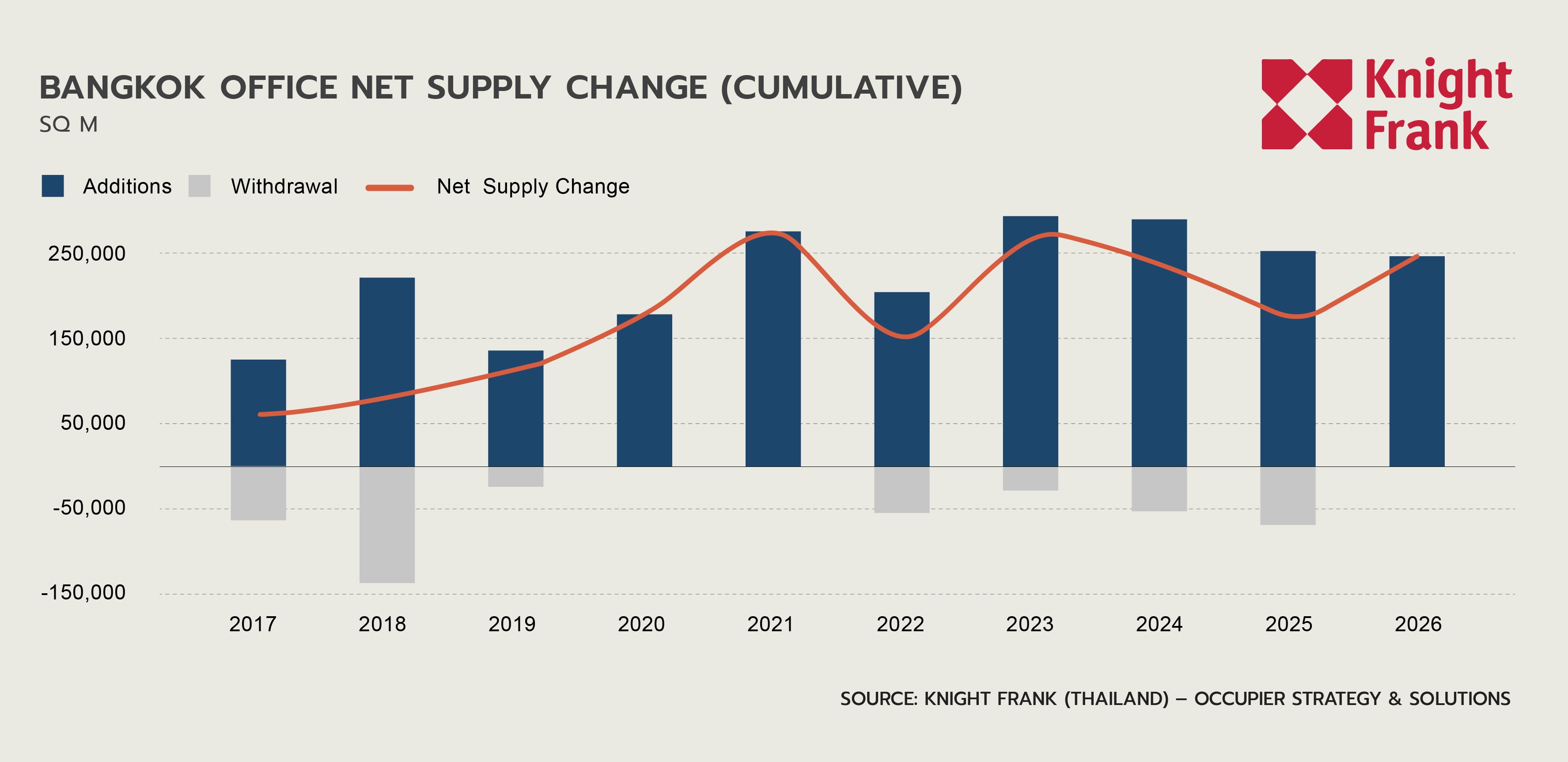
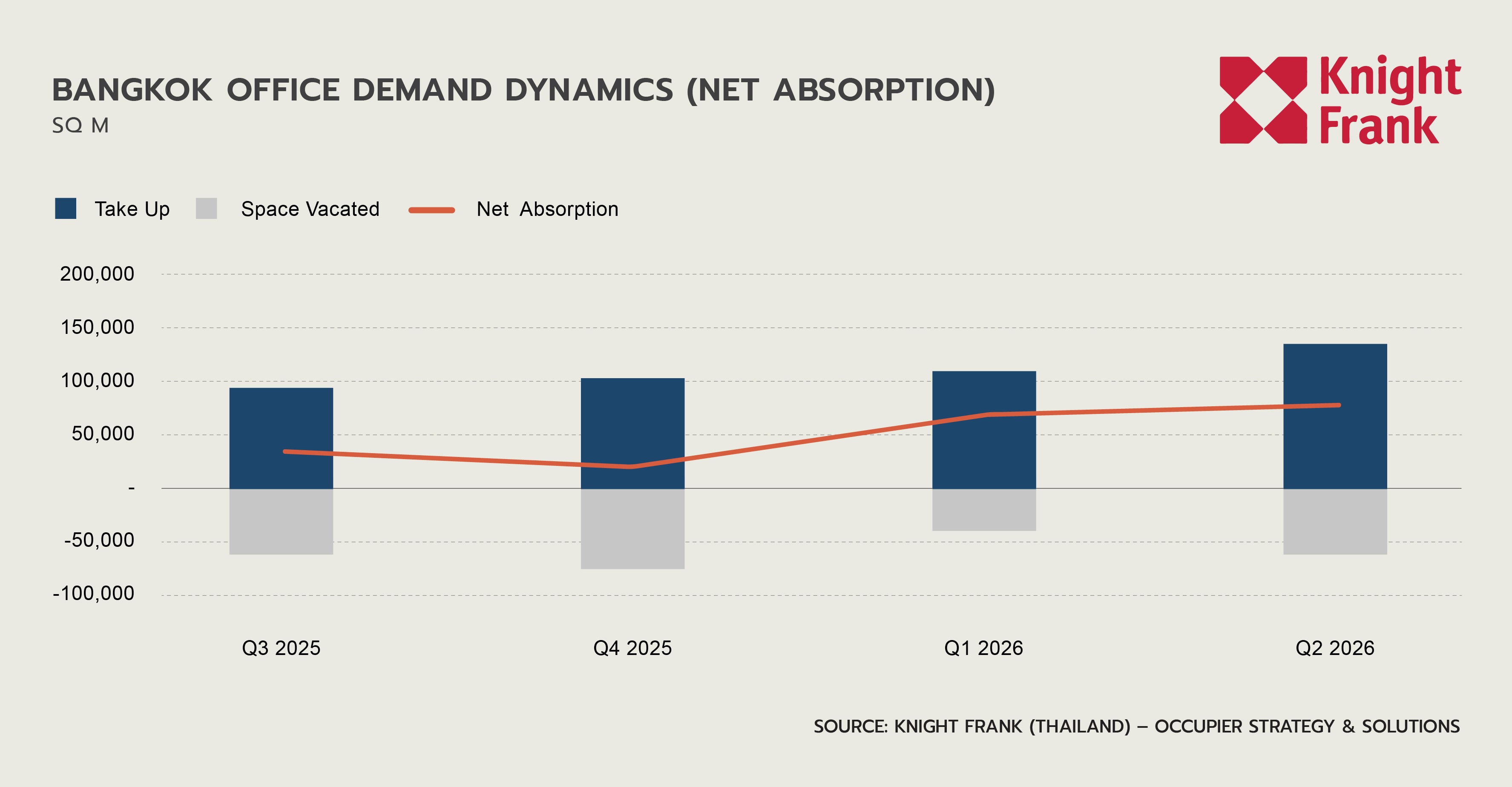
According to Knight Frank Thailand’s latest Office Property Market Q2 2026 report, five new office buildings were completed during the quarter, adding approximately 207,000 sq m of space and bringing Bangkok’s total office supply to 6.75 million sq m. Around 39% of the newly completed space was pre-committed, contributing to quarterly net absorption of approximately 76,000 sq m, the highest level recorded in several years. Nevertheless, the overall occupancy rate declined to 76.4%, as the volume of new supply entering the market exceeded demand growth during the quarter.
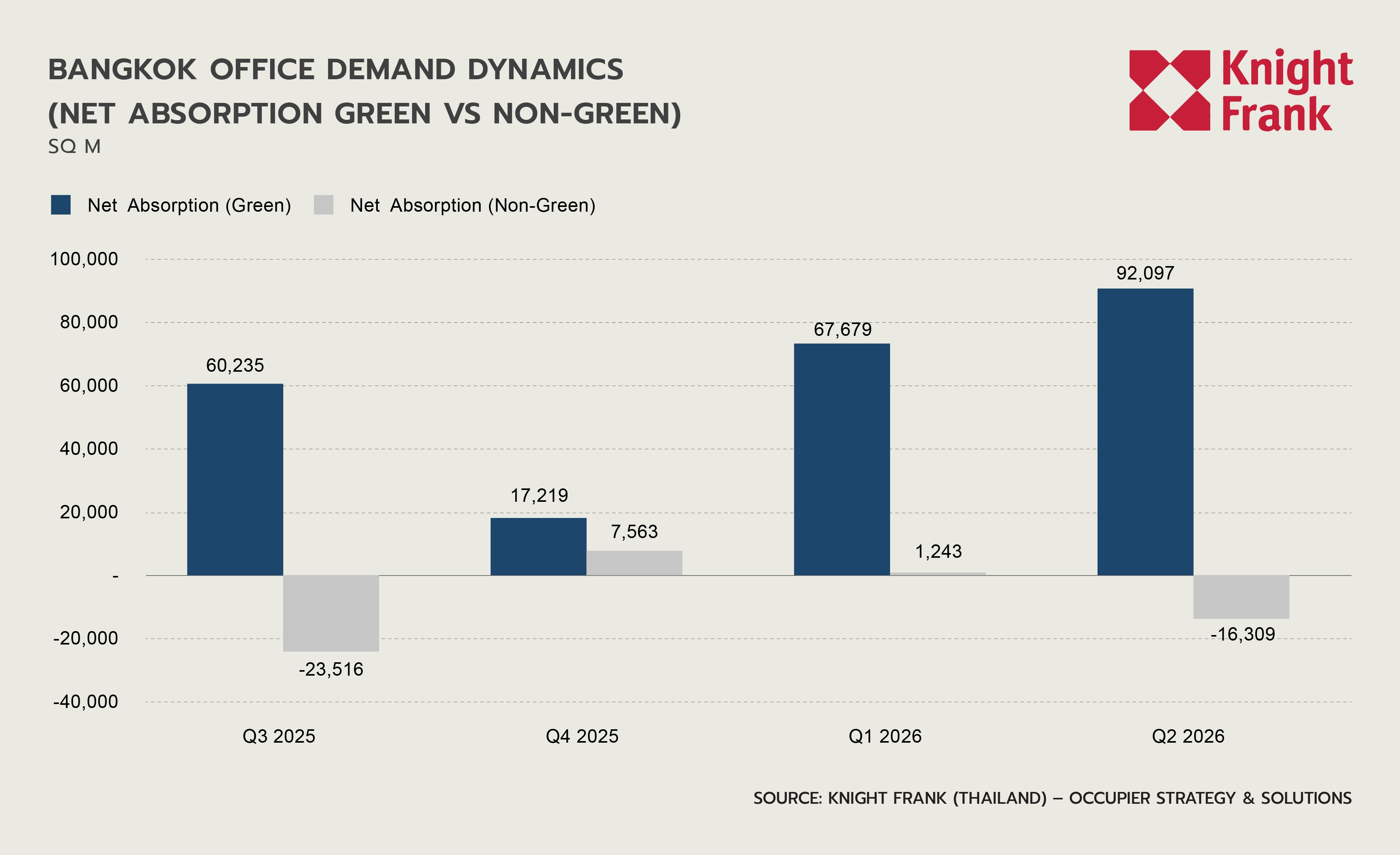
Knight Frank views the decline in occupancy as a reflection of the short-term increase in supply rather than a weakening in underlying demand. Occupier demand continues to favour higher-quality office buildings, particularly those with environmental certifications, which continued to record strong positive net absorption. By contrast, non-certified buildings remained in negative territory. This indicates that sustainability has shifted from a “nice to have” to an essential requirement for many occupiers, particularly multinational corporations that are placing greater emphasis on ESG objectives and operational efficiency.
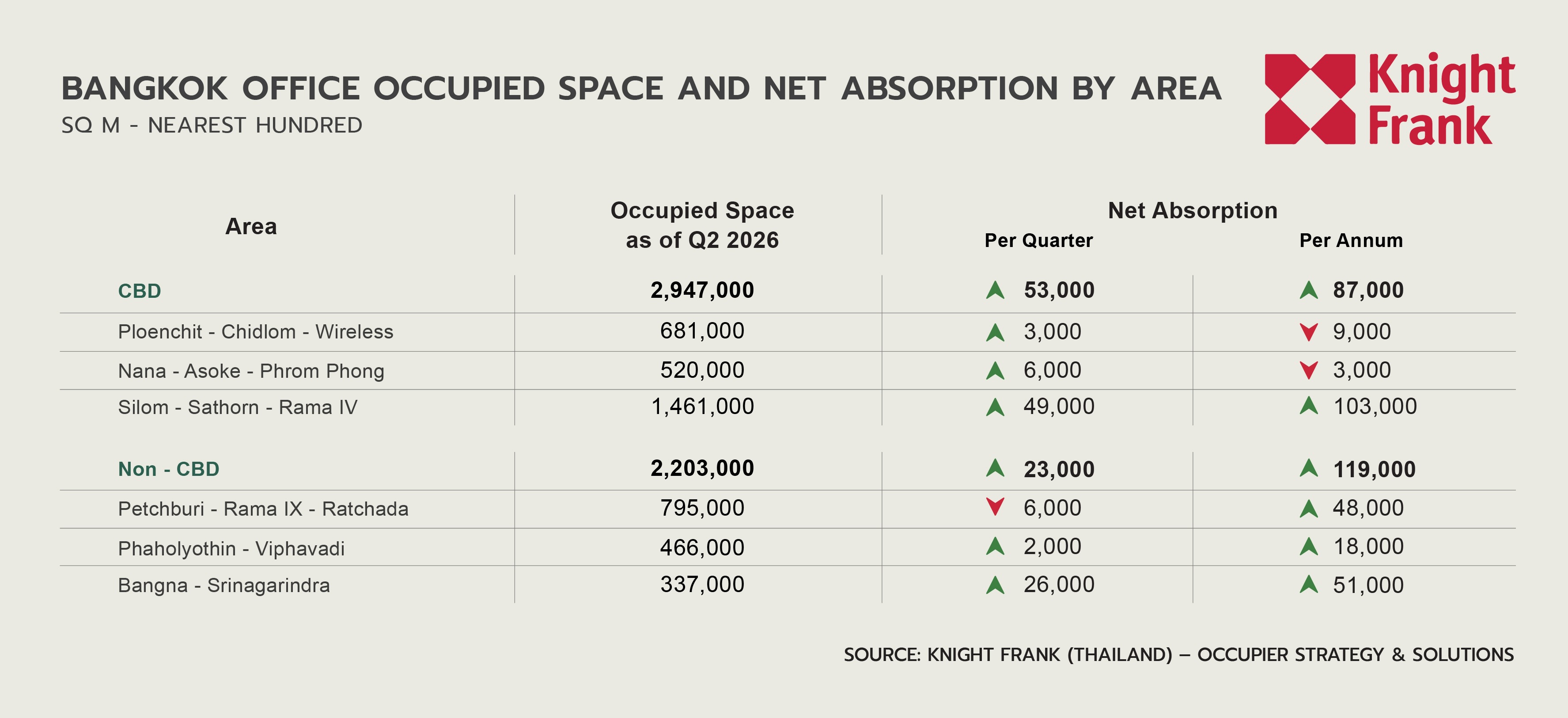
 Another important development is that demand for higher-quality office space is no longer concentrated solely within the Central Business District (CBD). While high-quality CBD offices continue to perform strongly, the growing availability of modern, high-standard buildings in Non-CBD locations is providing occupiers with a broader range of options at competitive rental levels.
 As a result, Flight to Quality is becoming more widespread across the Bangkok office market. This does not indicate a shift away from the CBD; rather, occupiers in both CBD and Non-CBD locations are upgrading towards better-quality buildings. As more modern office developments become available outside the CBD at competitive rents, high-quality buildings across both markets are benefiting from this trend.
At the same time, occupier requirements are also changing the way landlords compete. Demand for Fully Fitted and Ready-to-Occupy office space is increasing as companies seek to reduce upfront capital expenditure and shorten project and relocation timelines.
In response, landlords are offering a broader range of solutions, including Turnkey and Built-to-Suit space, while increasingly working with Design & Build firms or appointing specialists directly to deliver fitted office solutions. These approaches reduce both the financial and operational burden associated with office relocation and are becoming an increasingly important tool for attracting occupiers in a highly competitive leasing environment.
Mr Panya Jenkitvatanalert, Partner and Head of Office Strategy, Knight Frank Thailand, said:
“What we are seeing today is not simply competition between new and older buildings, or between CBD and Non-CBD locations. It is increasingly a competition between buildings that can respond effectively to occupier requirements and those that have yet to adapt. Occupiers are no longer looking simply for office space; they are looking for workplace solutions that can support business performance, manage costs, provide greater flexibility and align with their sustainability objectives.”
Mr Panya added:
“Going forward, competition will not be determined by rental levels alone, but by the value that a building can deliver to its occupiers. Buildings that can combine quality, sustainability, move-in readiness and a strong occupier experience will be better positioned to compete, even as further new supply enters the market.”
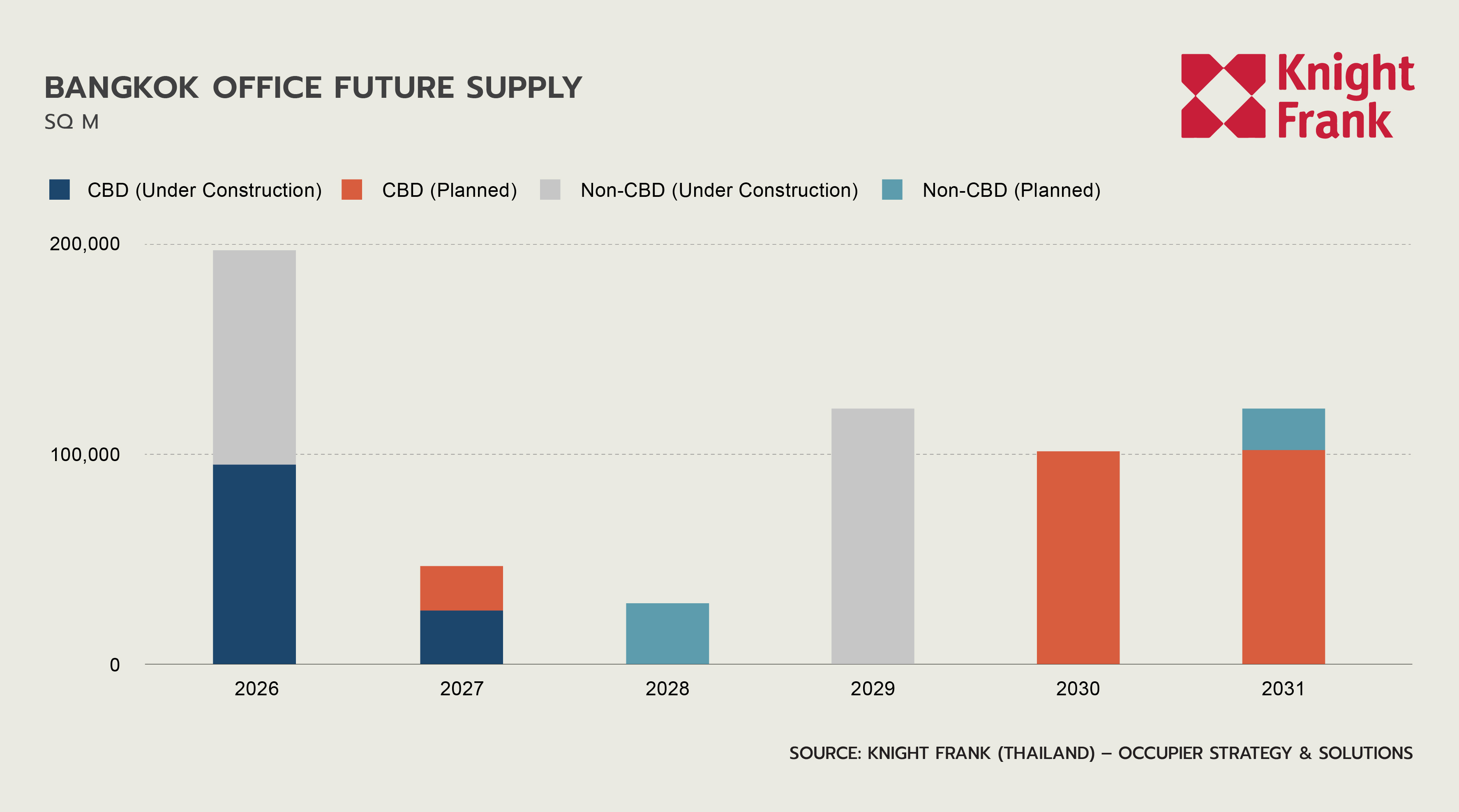
Knight Frank expects approximately 197,000 sq m of additional office supply to enter the Bangkok market during the second half of 2026, keeping competition elevated in the near term. However, as the future development pipeline begins to moderate and the economic outlook gradually improves, the market is expected to move towards a more balanced position. High-quality buildings that can respond effectively to occupiers’ evolving requirements for sustainability, flexibility and move-in readiness are expected to be best positioned to benefit from the market’s next phase.
Read fulll report: Click